
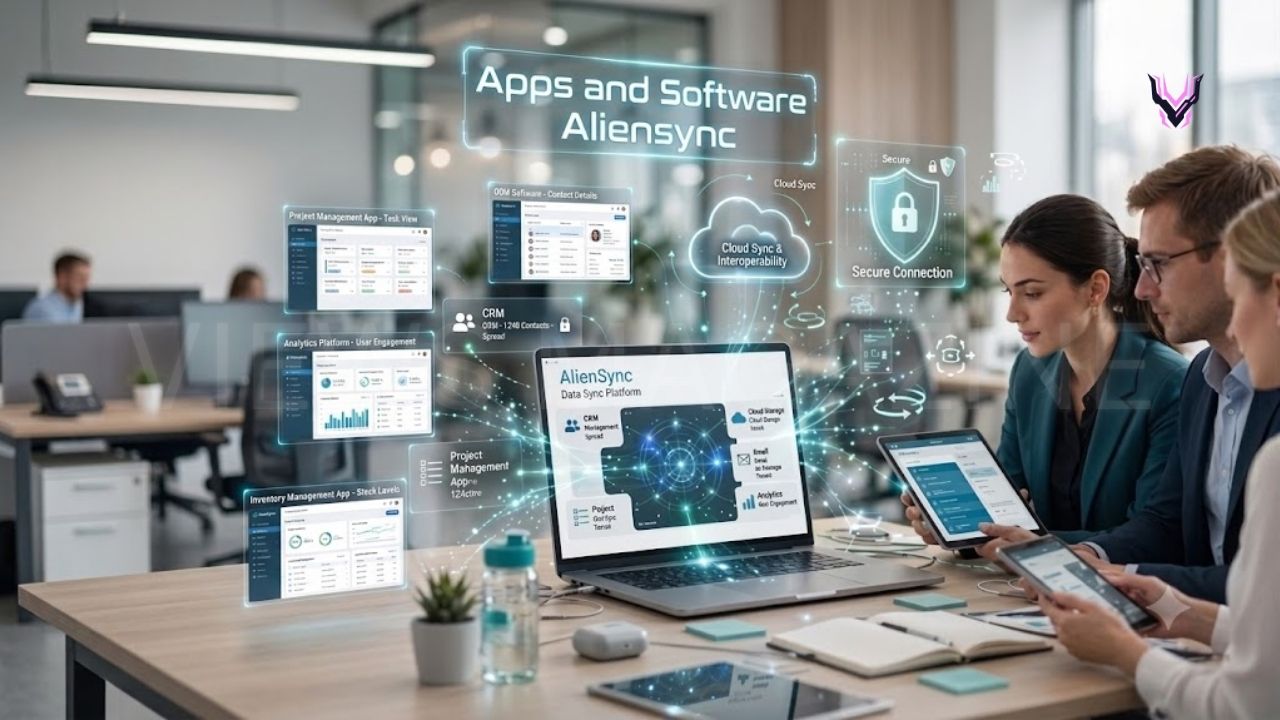
Modern businesses and individuals rely on dozens of digital tools every day to manage projects, communicate with teams, store files, and automate repetitive tasks. As organizations adopt more cloud-based applications, keeping information synchronized across different platforms becomes increasingly challenging. This is where Apps and Software Aliensync has attracted attention. The platform is described as a workflow automation and data synchronization solution designed to help users connect applications, centralize information, and improve productivity through seamless integrations.
Although Apps and Software Aliensync is discussed across several technology blogs and review websites, publicly available official documentation remains limited. Most information describes it as a platform that simplifies workflow management by synchronizing data between multiple applications and reducing manual work. Because independently verified technical specifications are scarce, users should confirm current features, supported integrations, and pricing through the official provider before making business decisions.
What Is Apps and Software Aliensync?
Apps and Software Aliensync is described as a workflow automation and application synchronization platform that helps users connect multiple software tools into a single, more efficient ecosystem. Instead of manually transferring information between applications, users can automate data updates, synchronize records, and reduce repetitive administrative work. This type of software is particularly useful for organizations that rely on cloud services such as project management platforms, customer relationship management (CRM) systems, file storage solutions, and communication tools.
The reported goal of Aliensync is to simplify digital workflows while improving collaboration across teams. By ensuring that information stays consistent across connected applications, organizations can minimize data entry errors and improve operational efficiency. Whether managing customer information, project updates, or shared documents, synchronization software helps teams spend less time on manual tasks and more time on productive work. As businesses continue adopting digital transformation strategies, solutions like Aliensync are becoming increasingly valuable for maintaining connected workflows.
Key Features of Apps and Software Aliensync
One of the most frequently highlighted features of Apps and Software Aliensync is its ability to synchronize information automatically across multiple connected applications. Rather than requiring employees to update every platform individually, the software reportedly transfers changes in real time or according to scheduled synchronization rules. This automation helps reduce duplicate work while improving the accuracy and consistency of business data across different departments.
In addition to synchronization, Aliensync is reported to include workflow automation tools that allow organizations to create automated processes based on predefined conditions. Users may be able to trigger notifications, update project records, move files, or generate reports automatically when specific events occur. Many workflow automation platforms also include customizable dashboards, integration management, user permissions, and monitoring tools that help administrators oversee connected systems from a centralized interface. These capabilities can improve productivity while reducing the need for repetitive manual processes.
How to Set Up Aliensync
The setup process for Apps and Software Aliensync generally begins with creating an account and selecting the applications you want to connect. After registering, users typically authenticate each supported service by granting secure access through standard authorization methods. Once connected, administrators can configure synchronization rules that determine which data should be shared, how frequently updates occur, and which users have permission to access specific workflows. Proper planning during this stage helps prevent duplicate records and ensures that only relevant information is synchronized.
After configuring integrations, organizations should test each workflow before deploying it across an entire team. Running sample synchronizations allows administrators to verify that information is transferred accurately between connected applications. Monitoring system activity during the first few days also helps identify configuration errors or permission issues that may affect performance. Once testing is complete, users can begin relying on automated synchronization to reduce manual work and improve operational efficiency across multiple software platforms.
Supported Apps and Integrations
A major advantage reported for Apps and Software Aliensync is its ability to connect with multiple categories of business software. Although supported integrations may vary depending on subscription plans and future updates, workflow synchronization platforms commonly connect with customer relationship management systems, cloud storage services, project management applications, communication tools, accounting software, and productivity suites. These integrations allow organizations to build centralized workflows without replacing the software they already use.
For example, a business might synchronize customer information between its CRM platform and marketing software while automatically updating project management tools whenever sales milestones are reached. Similarly, document management systems can remain synchronized with cloud storage services, ensuring that employees always access the latest file versions. Before implementing Aliensync in production environments, businesses should review the current list of officially supported integrations to confirm compatibility with their existing technology stack.
Benefits for Individuals and Businesses
Apps and Software Aliensync is designed to improve productivity by reducing the amount of manual work required to keep information updated across multiple applications. Instead of copying data from one platform to another, users can automate synchronization tasks and focus on higher-value work. This approach helps minimize human error, improves data consistency, and saves time for employees who regularly manage customer records, project updates, or shared documents. For freelancers and small businesses, automation can simplify daily operations without requiring extensive technical expertise.
Larger organizations can also benefit from centralized workflow management. Teams working in sales, marketing, finance, customer support, and project management often rely on different software platforms. Synchronizing these systems allows departments to access accurate, up-to-date information without unnecessary delays. Better collaboration can lead to faster decision-making, improved customer service, and more efficient business processes. By eliminating repetitive tasks, businesses may also reduce operational costs while increasing overall productivity.
Security and Privacy Features
Data security is an important consideration for any platform that connects multiple applications. Apps and Software Aliensync is commonly described as supporting security measures such as encrypted data transfers, secure authentication, and user access controls. These features are intended to help protect sensitive information while it moves between connected systems. Organizations handling customer records, financial data, or confidential business information should always verify that the platform meets their security and compliance requirements before deployment.
Role-based permissions are another reported feature that can improve system security. Administrators may be able to assign different access levels to employees based on their responsibilities, ensuring that users only view or modify information relevant to their roles. Regular monitoring, account audits, and strong password policies further strengthen overall security. Since security capabilities may change as the platform evolves, reviewing the latest official documentation before implementation is recommended.
Tips to Get the Most Out of Aliensync
To maximize the value of Apps and Software Aliensync, organizations should begin by identifying repetitive tasks that consume significant time. Automating processes such as contact synchronization, project updates, invoice notifications, or file management can deliver immediate productivity improvements. Starting with a small number of workflows also makes it easier to monitor performance and resolve configuration issues before expanding automation across the entire organization.
Regularly reviewing synchronization logs and workflow performance is equally important. As business processes change, automation rules may require updates to remain effective. Administrators should periodically remove unused integrations, optimize synchronization schedules, and ensure that connected applications remain compatible after software updates. Training employees on best practices also encourages consistent use of the platform and helps teams take full advantage of automation features while minimizing errors.
Common Challenges and Solutions
Like many workflow automation platforms, Apps and Software Aliensync may present challenges during initial setup. One common issue involves incorrect synchronization rules, which can result in duplicate records or incomplete data transfers. Careful planning, testing, and validation before enabling live synchronization can significantly reduce these problems. Organizations should also document workflow configurations so that future administrators can maintain and update integrations more efficiently.
Another challenge involves compatibility between third-party applications. Software providers frequently update APIs and integration methods, which may occasionally require adjustments to synchronization settings. Monitoring system notifications and reviewing integration status after updates helps ensure continued reliability. Establishing clear data management policies and maintaining regular backups also provides additional protection against unexpected synchronization issues.
Apps and Software Aliensync vs. Alternatives
Apps and Software Aliensync belongs to a growing category of workflow automation and integration platforms. Depending on their requirements, businesses may also evaluate alternatives such as Zapier, Make (formerly Integromat), Microsoft Power Automate, or Workato. These platforms provide similar capabilities, including application integration, workflow automation, and data synchronization. The best choice depends on factors such as supported integrations, pricing, ease of use, customization options, and scalability.
Organizations comparing Aliensync with competing solutions should consider several important factors:
| Feature | Apps and Software Aliensync | Typical Alternatives |
|---|---|---|
| Workflow Automation | Yes (reported) | Yes |
| App Integrations | Multiple supported integrations (reported) | Extensive integration libraries |
| Cloud-Based Access | Yes (reported) | Yes |
| Custom Workflows | Available (reported) | Yes |
| Team Collaboration | Supported (reported) | Yes |
| Enterprise Scalability | Depends on subscription and implementation | Available on most enterprise platforms |
Before selecting any automation platform, businesses should evaluate their existing software ecosystem, technical requirements, budget, and long-term growth plans. Testing available trial versions or demonstrations can also help determine which solution best fits organizational needs.
Conclusion
Apps and Software Aliensync is presented as a workflow automation and data synchronization solution that helps individuals and businesses connect applications, automate repetitive tasks, and improve operational efficiency. By reducing manual data entry and keeping information synchronized across multiple platforms, it aims to streamline daily workflows and enhance collaboration. For organizations managing several cloud-based tools, a centralized synchronization platform can improve productivity while minimizing errors caused by duplicate or outdated information.
However, users should note that publicly available technical documentation for Apps and Software Aliensync remains limited. Before adopting the platform, it is important to verify its latest features, supported integrations, security standards, and pricing through official sources. Comparing Aliensync with other workflow automation solutions can also help businesses determine whether it meets their operational needs. With proper planning, testing, and ongoing monitoring, synchronization software can become a valuable part of a modern digital workflow.
Stay More Update VIEWS MAGAZINE